
The Zambia carbon registry could change how climate projects are recorded, reviewed and transferred. For farmers and rural communities, however, the Zambia carbon registry is only the beginning. The harder questions are whether projects measure real results, explain contracts clearly and share benefits fairly.
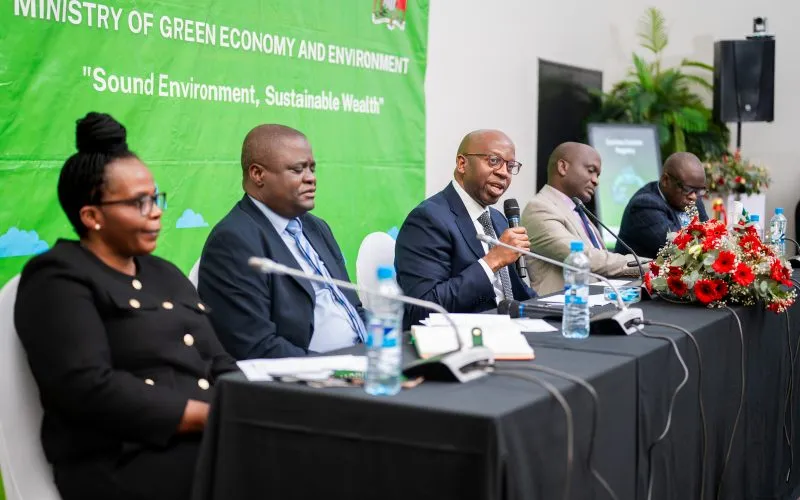
Zambia launched the registry in August 2026 as it prepared for carbon-market cooperation under Article 6 of the Paris Agreement. The UN Environment Programme says the platform will track carbon-market activities, support authorizations and improve accounting transparency.
This article explains what the registry does, why it matters for Zambia and what a smallholder farmer should ask before signing a carbon project agreement.
What is the Zambia carbon registry?
A carbon registry records climate-mitigation activities and their associated units or outcomes. It gives the country a record of active projects, the people responsible for them, the results they measured and the status of each emissions reduction. It can show whether someone transferred, retired or cancelled a unit.
Zambia links the platform to its monitoring, reporting and verification system. That connection matters because carbon claims need more than a promising project description. They need evidence showing what happened, how teams measured it and whether anyone counted the same reduction twice.
Why Article 6 matters
Article 6 of the Paris Agreement provides rules for countries to cooperate in meeting climate goals. One route lets countries transfer mitigation outcomes. If a country authorizes an international transfer, it may need to adjust its accounts so both countries do not claim the same reduction.
This is a national accounting issue, but it has local consequences. A project on farmland, forest or community land may generate a credit or mitigation outcome. A developer may sell that unit to a company or another country. The registry should show who authorized the activity and what happened to the unit afterwards.
It does not automatically prove that every project is environmentally sound or that every community agreement is fair. Registration is an important control, not a substitute for good measurement, consultation and benefit sharing.
What the Zambia carbon registry is expected to record
The platform is designed to support several functions:
- Registering mitigation activities and projects
- Managing monitoring and verification information
- Issuing outcomes with unique serial numbers
- Tracking transfers, retirements and cancellations
- Recording authorizations and Article 6 reporting
- Connecting carbon accounting with Zambia’s national inventory and climate targets
The system should also help project developers, authorities, technical bodies and the public review information. Public visibility helps affected communities only when they can understand and use that information.
What this could mean for Zambian farmers
Farmers may hear about carbon projects involving agroforestry, improved soil management, biochar, reduced deforestation, clean cooking or renewable energy. Project developers may ask farmers to change practices and let teams measure results on their land. Other projects may involve community forests or shared infrastructure.
The Zambia carbon registry could make it easier to check whether a project has reached the national system. It may also reduce the risk of two developers claiming the same activity or selling the same reduction twice.
That does not mean every farm practice qualifies for a carbon credit. A useful farm activity still needs a credible baseline, a measurable change, a method for monitoring the result and a way to show that the change would not have happened in exactly the same way without the project.
Questions to ask before signing a carbon agreement
Farmers and community representatives should not sign a carbon contract because someone promises easy income. Before agreeing, ask:
- Who is the project developer and who will verify the results?
- What activity will the project measure, and what baseline will the team use?
- Who owns the land, trees, data and resulting carbon units?
- How long does the agreement last?
- What happens if the crop fails, trees die or the farmer leaves the project?
- How will the developer calculate payments, and which costs will it deduct?
- When will payments arrive, and what evidence will participants receive?
- Can the farmer withdraw, and what penalties apply?
- How are complaints handled?
- What safeguards protect food production, land rights and community consent?
A contract should explain these points in language participants understand. A farmer should be able to take the agreement away, discuss it with trusted people and obtain independent advice before signing.
Why measurement matters on a working farm
Carbon projects often depend on measurements that are more detailed than ordinary farm records. A project may need dates, plot boundaries, tree survival, soil practices, input use, yields, photographs and evidence of what happened over time.
Our own farm record system serves a smaller purpose: comparing plans, costs, failures and results. Farmers can apply the same discipline when they evaluate a carbon proposal. Ask what the project team plans to measure, how often it will check results and where it will store the data. Without those answers, a promise of carbon income remains incomplete.
Farmers should keep copies of field records, maps, consent forms and payment statements. Carbon claims should not depend entirely on a developer’s private database.
Transparency is not the same as guaranteed income
A national registry can improve traceability, but it cannot guarantee a carbon-credit price. Markets change, verification costs can be high and a project may produce fewer units than expected. Authorities or verifiers may reject some activities, delay them or decide they do not meet the required standard.
Farmers should therefore treat carbon income as uncertain unless a contract explains a specific payment arrangement. A project should make sense for the land and household even if the carbon market performs below expectations.
What Zambia should watch next
The next stage is implementation. People will want to know which projects Zambia registers, what information authorities publish, how officials review authorizations, how local communities participate and how people resolve disputes.
Future updates may add voluntary carbon-market activities. Clear communication will matter: a voluntary credit, an Article 6-authorized outcome and a climate claim relate to one another, but they do not mean the same thing.
For Zambia, the registry is an opportunity to build trust before the market grows larger. Trust will depend on more than software. It will depend on accurate records, independent scrutiny, understandable contracts and evidence that climate finance reaches people who change how people manage land and energy.
Carbon markets should start with the farm reality
At Carbonnest, we are interested in the practical side of climate action: what a farmer changes, what it costs, what survives a difficult season and who benefits from the result. A registry can help organize the national record, but good climate finance still begins with honest field evidence.
Are you involved in a carbon, agroforestry, biochar or renewable-energy project in Zambia? Share what you were told, what the agreement requires and what questions remain unanswered. Clear local experiences can help other farmers evaluate opportunities more carefully.

