
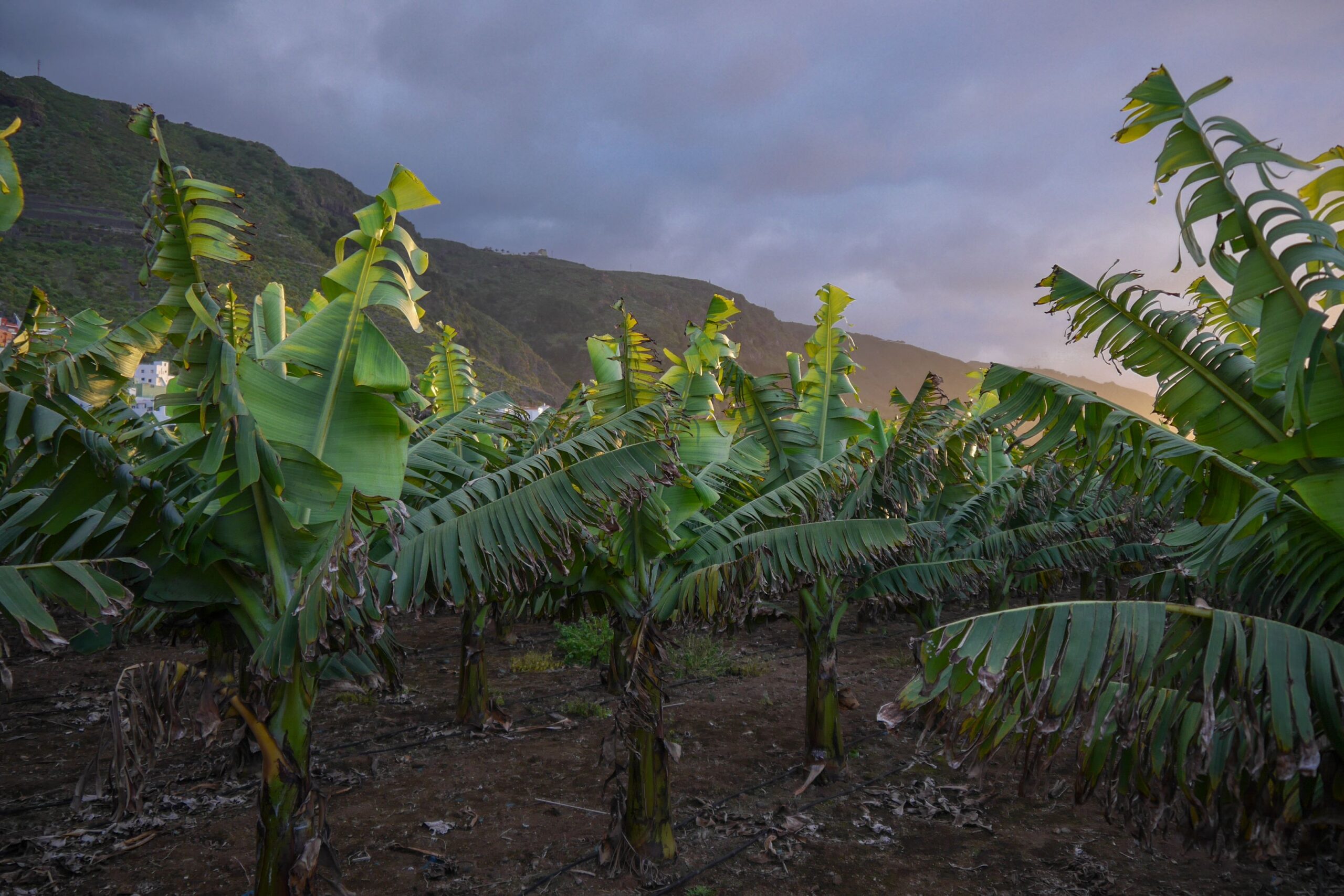
Our banana drip irrigation project near Mwembeshi, Zambia, did not stall because planting was impossible. It stalled because we planted faster than we planned how water would reach the crop. Pump failure, an undersized solar setup, an incorrect electrical configuration and three incidents of cattle eating the banana leaves made that original mistake more costly. In September 2026, we began a six-month, self-funded plan to rebuild the system around drip irrigation.
This banana drip irrigation project in Zambia is not a success story written after the fact. It is the starting record of a recovery project. We are publishing the plan, costs and failures now, then we will update the record with installation photographs, water measurements and plant results as the work progresses.
The project at a glance
| Location | Mwembeshi, Zambia |
|---|---|
| Project | Banana plantation drip-irrigation recovery |
| Project period | Six months from the start of installation |
| Water pump | Replacement 1 HP pump |
| Solar array | Two 450 W panels (900 W nominal total) |
| Planned distribution | Poly mainline with blank lateral pipe and button drippers |
| Complete-kit quotation | ZMW 5,419 |
| Current approach | Purchase and install the system in stages using income from our own work and side projects |
Where our banana drip irrigation project went wrong
The first failure was planning. Our family wanted to establish the banana plantation quickly, and planting moved ahead before we had settled the full water-distribution design. The ambition was larger than the infrastructure supporting it.
That sequence matters. Planting creates an immediate responsibility to deliver water reliably. Once the plants were in the ground, we were trying to solve the mainline route, pump capacity, solar supply, fittings and irrigation budget while the crop was already waiting. A phased planting programme would have allowed us to prove the water system on a smaller block before extending it.
As a temporary workaround, we even installed five taps so we could water the banana plants manually. On the very first day, the task proved daunting and tiring. Moving from tap to tap and hand-watering the plantation made clear that manual watering could not be our long-term system; the work consumed too much time and energy before the irrigation design was even solved.
Our central lesson is simple: the irrigation route should be designed, costed and tested before the planting area is expanded. On our next expansion, the amount of land planted will follow the amount of land we can water—not the other way around.
Pump failure stopped more than the flow of water
The original pump failed and had to be replaced with a 1 HP pump. The failure interrupted irrigation, but replacing the pump alone did not restore a dependable system. The replacement also changed what the solar installation needed to supply.
We upgraded the solar array to two 450 W panels, giving a nominal combined rating of 900 W. An incorrect configuration then produced a P15 high-voltage message on the pump controller. Earlier attempts did not resolve it. A friend later returned to the installation and corrected the configuration.
Before turning this experience into technical guidance, we still need to record the pump model, controller model, panel electrical specifications, original wiring arrangement and exact correction. Until those details are documented, this remains a field account—not a universal explanation of every P15 code. Error codes can differ between manufacturers.
Cattle damaged the recovering plants three times
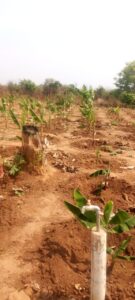
Water was not the only constraint. During hot periods, cattle from neighbouring areas reached the plantation and ate banana leaves on three separate occasions. The repeated loss of leaf area set growth back further.
This exposed another planning gap: crop establishment also depends on physical protection. Our recovery record therefore needs to track both irrigation and cattle control. If we improve the water supply without preventing another incursion, it will be difficult to separate irrigation results from fresh grazing damage.
Future updates will document the protection method we use, its cost and whether it prevents additional damage. We will describe the incidents without identifying or blaming individual neighbours; the purpose is to understand the production risk and improve the farm system.
Why we chose button drippers for banana drip irrigation
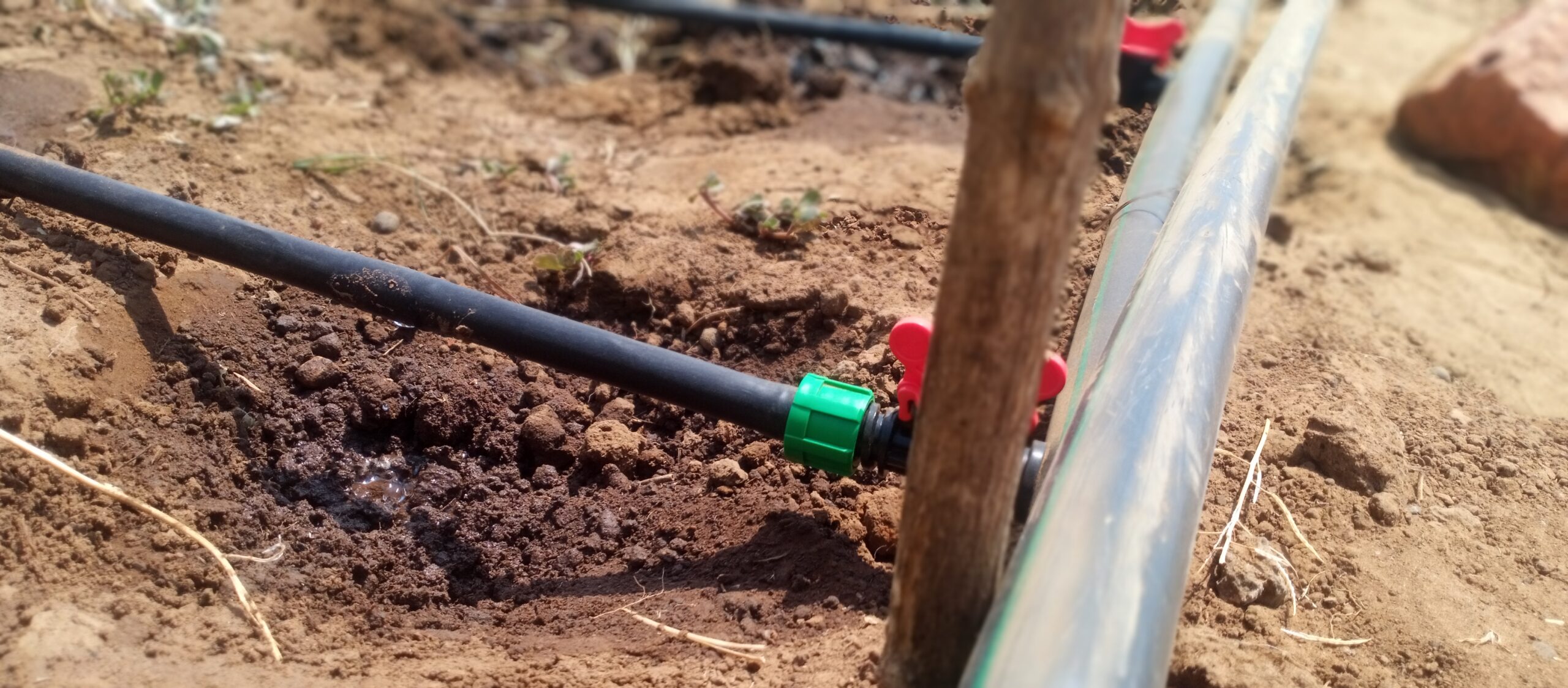
We have bought poly pipe so the first installation stage can begin. The current design is to carry water through a mainline and use blank lateral pipe fitted with button drippers near individual banana plants. The final pipe diameters, emitter flow rate, line lengths and number of emitters per plant still need to be confirmed and recorded.
For our banana drip irrigation system, the choice is intended to give us control over where water is delivered and to make the system expandable in affordable sections. It does not automatically guarantee even irrigation. Pressure loss, lateral length, elevation, emitter selection, blockage and installation quality can all affect discharge.
Published research supports paying attention to emitter placement rather than treating all drip layouts as equivalent. A banana study led by researchers from Embrapa and partner institutions found that the number and arrangement of emitters affected root distribution, water extraction and deep-percolation losses. Its soil, cultivar and operating conditions differ from ours, so we will not copy its configuration blindly. We will use the finding as a reason to measure our own wetting pattern and discharge. See the banana emitter-pattern study.
The UN Food and Agriculture Organization also lists drip among the irrigation systems used in banana production and emphasizes the importance of water management. Its guidance provides useful context, but our design still has to match the water source, soil, pressure and budget at Mwembeshi. See the FAO World Banana Forum water guidance.
The ZMW 5,419 constraint
We received a price of ZMW 5,419 for the complete custom drip kit intended to meet the plantation’s needs. We cannot fund the full package at once. Farm improvements are being paid for from our own pockets and side work, so the alternative is a staged six-month installation.
Staging is slower, but it creates a useful discipline: each completed section can be pressure-tested and measured before the next purchase. The risk is that changing prices or incompatible purchases could increase the final cost. To control that risk, we will maintain one bill of materials and record each purchase against it.
| Cost item | Current record | Status |
|---|---|---|
| Complete custom drip kit | ZMW 5,419 | Quoted; not affordable as one purchase |
| Poly pipe | Amount to be added from receipt | Purchased |
| Replacement 1 HP pump | Amount to be added from receipt | Purchased |
| Two 450 W solar panels | Amount to be added from receipt | Installed |
| Blank lateral pipe, button drippers and fittings | Itemised amounts pending | Planned in stages |
We will replace the pending entries with receipt values before presenting this table as a complete project budget. Keeping the unknowns visible is more honest than inserting estimates and later forgetting which numbers were real.
Our six-month banana drip irrigation plan in Zambia
| Stage | Planned work | Evidence we will collect |
|---|---|---|
| Month 1 | Map the banana block, count plants, confirm the mainline route and install the purchased poly pipe. | Plant count, measured distances, pipe specifications, photographs and receipts. |
| Month 2 | Purchase the first section of blank lateral pipe, button drippers and compatible fittings. | Supplier, quantities, unit prices and product specifications. |
| Month 3 | Install and test the first irrigation zone before extending it. | Pressure where measurable, leaks, pump runtime and emitter-discharge samples. |
| Month 4 | Correct problems found in the first zone and extend the laterals. | Changes made, additional costs and before-and-after discharge results. |
| Month 5 | Complete the remaining affordable sections and check plant-level wetting. | Number of plants served, wetting observations and photographs. |
| Month 6 | Audit the installation and compare the finished system with the original plan. | Total cost, coverage, unresolved gaps and early plant-growth observations. |
This is a projection, not a promise that every stage will finish on schedule. Income, component availability, weather and new equipment failures may change the sequence. Any delay will be recorded rather than hidden.
How we will test the banana drip irrigation system
A pipe carrying water is not enough evidence of successful irrigation. We need to know whether plants near the end of a line receive water at a rate reasonably close to plants near the beginning.
For each completed zone, we plan to:
- count the banana plants connected to the zone;
- record the lateral length and number of button drippers;
- collect water from selected emitters near the beginning, middle and end of a line for the same measured period;
- calculate approximate discharge in litres per hour;
- photograph the soil wetting pattern after a consistent irrigation period;
- record pump runtime and solar conditions;
- note leaks, blockages and fittings that fail; and
- take repeat photographs of selected banana plants from fixed positions.
These observations will not turn the farm into a research station, but they will let us make better decisions than visual guesswork alone. They will also show readers exactly how our conclusions were reached.
What happens after the banana irrigation work
The banana plantation is the first priority because the plants are already established and have already experienced setbacks. Once its irrigation is operating, our next planned projects are:
- returning to the field where the 2026 onion irrigation effort was disrupted by pump, solar and funding problems;
- installing drip irrigation for a future garlic plot near the old piggery;
- replacing an overambitious fish-pond idea with a smaller pilot that we can manage and measure; and
- gradually increasing ducks and village chickens while carefully assessing whether poultry nutrients can be used safely in the pond system.
Each project will be documented separately. We will not claim results before they exist, and plans involving animal waste and fish production will be checked against appropriate water-quality and food-safety guidance before implementation.
What we would do differently
If we were beginning again, we would start with a smaller irrigated phase. We would map the water route, confirm the pump and solar configuration, install and test one zone, protect the plot from cattle, and only then plant the next phase.
Dreaming big was not the problem on its own. The problem was allowing the size of the planting plan to move ahead of the water plan and available budget. Our six-month recovery is an attempt to reverse that order.
Questions this field project will answer
Why did the banana plantation stall?
The main constraints were incomplete water-distribution planning, pump failure, solar and controller configuration problems, limited project funding and three cattle-damage incidents. We cannot yet assign a percentage of the growth loss to each factor.
Why not buy the complete drip kit immediately?
The quoted ZMW 5,419 package is beyond the amount currently available for one purchase. The installation is funded from personal income and side work, so components will be bought in compatible stages.
When will results be available?
Installation records will be published as each stage is completed. A six-month audit will report the total cost, plants reached, water-distribution measurements, failures and early crop response. Meaningful production results may require a longer observation period.
Readers can review how Carbonnest sources evidence and records measurements, as well as our corrections policy.


I have read several excellent stuff here. Certainly worth bookmarking
for revisiting. I wonder how so much attempt you set to make
any such wonderful informative site.
@tortugacasinoit.com,
Thank you for the kind words and for reading. We’re planning to visit the farm this week to begin the initial Phase 1 setup, including mapping plots, documenting baseline conditions, and preparing the drip-irrigation trial. We’ll share the practical lessons and results as the work progresses.
Excellent analysis 👍. A lot needs to be done. A Game wire surrounding the premises would be ideal to deter any other stray animals gaining entry into the farm. Additionally, since the farm is still in its infancy, another borehole supported by a bigger tank may be needed to avoid water shortages when there’s power failure or otherwise.
Yes, this is precisely why we are running this structured assessment.
It gives us a clear, evidence-based view of what must be done now versus what can wait, so we can separate the critical “must-do” actions from the lower-priority ones. The goal is simple: break the annual cycle of repeating the same constraints and finally move the farm onto a productive trajectory instead of staying stuck in the same under-performing loop year after year.