
I included the Kugarika fish pond in my plan for Kugarika Tange Nhamo Farm, but my documents do not show a completed or stocked pond. The records say digging began around 2023 and then stopped. Later, someone proposed a tarpaulin pond alongside the original idea. I will record this as an unfinished project, not active fish production.
By Gideon Mafungautsi Kapamulomo · Kugarika Tange Nhamo Farm, Mwembeshi, Zambia · Farm records reviewed 11 October 2026
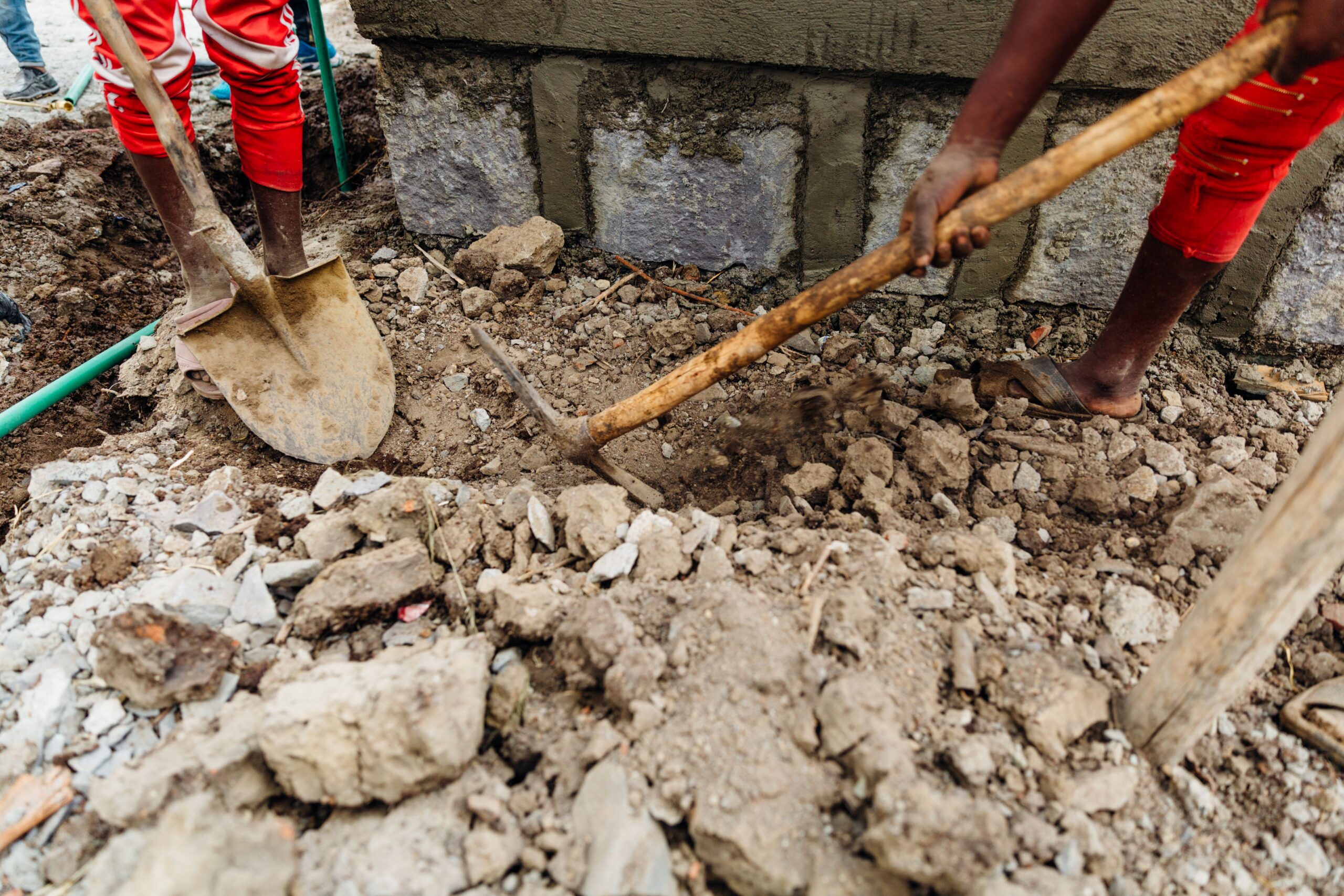
Illustrative photo: workers digging by hand with shovels and a pickaxe, by K. Lover of aerials and photography via Pexels. This is not a photo of our pond; the Kugarika pond was dug manually.
What happened to the Kugarika fish pond plan
The farm notes say we began digging the pond around 2023. We expected community support, but it did not continue. The notes also say some cement remained unused. I found no measured pond plan, complete construction budget, or final inspection of the work. I cannot report the pond’s capacity or say it is ready to hold water or fish.
A later note suggests a tarpaulin pond as a smaller step while we continue to consider the excavated pond. The note records no purchase or installation. It names no supplier, size, fish species, stocking date, feed plan or operating cost.
Why I am not calling it a fish farm yet
A pond structure alone will not show whether fish production works. Before I measure results, I need to document the pond design, water source and retention, preparation cost, stocking plan and fish care. My files do not answer those questions. They also contain no record that anyone stocked, harvested or sold fish from either pond.
That distinction matters because I have other farm plans that are easy to confuse with completed work. The tarpaulin pond remains a proposal. Excavation alone does not prove fish production. The dashboard should reflect each stage only when I can attach a dated activity, photograph, purchase record or measurement.
A practical record for the next decision
Before spending more, I plan to visit the site and document the condition of the excavated pond, any usable materials, and the water source available. If I compare that option with a tarpaulin pond, I need to write down the dimensions, materials, delivery and labour costs, water needs and maintenance requirements for each. I can then decide which option fits our budget and the time we can give it.
If we proceed, I will record the construction date and stages, water source and level, fish species and number we stock, feed used, any losses, water checks, harvest weight and sales. Those details would let me see whether the project is feasible before expanding it. This is my proposed recordkeeping plan. I have not collected these measurements or production results yet.
For now, the farm’s Fish Pond plot remains a planning record. I will update this article after I document the site or begin construction. I would rather leave the status open than turn an old idea into a claim of production.
Read the Kugarika irrigation cost record for the related water-system history.

