
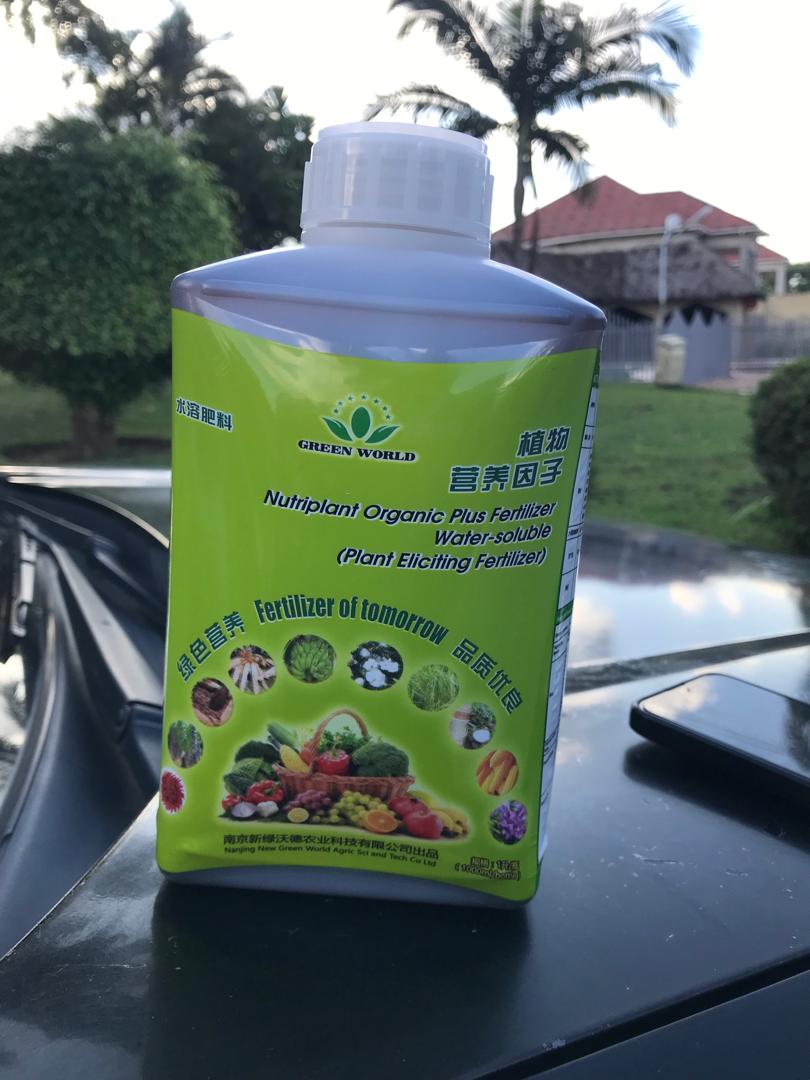
Many growers want a simple way to support crops through establishment, flowering and harvest. Nutriplant Organic Plus liquid fertilizer (NOPF) is sold as a water-soluble plant nutrition product for a wide range of crops. The bottle supplied for this guide identifies it as a “Plant Eliciting Fertilizer” from Green World.
This guide explains the application programme supplied with the product, how to mix a 20-litre sprayer and the precautions farmers should take. The crop intervals below are practical guidance shared with Carbonnest; always compare them with the current product label and advice from a qualified agronomist before spraying.
For a related case study, read our banana drip irrigation project in Zambia and see how we are building a farm record system from real mistakes.
Nutriplant fertilizer: what it is
The supplier markets NOPF as a liquid fertilizer that can support crops during vegetative growth, flowering and production. The supplier presents it for maize, beans, potatoes, onions, tomatoes, coffee, melons, bananas, fruit trees, vegetables, flowers and other crops.
Nutriplant fertilizer is one input in a wider crop-management plan. A fertilizer can supply nutritional support, but it cannot repair every production problem. Crop performance still depends on soil fertility, water, seed or planting material, pest management, spacing, sunlight and timely field work. Farmers should record the crop condition before and after each application instead of assuming that a greener plant proves a product caused the change.
Nutriplant fertilizer mixing rate
The general rate supplied for NOPF is 20 ml in 20 litres of clean water, unless the product label gives a different rate for a particular crop or situation. Do not increase the concentration because a crop looks weak. A stronger solution can increase the risk of leaf injury, wasted product or an unintended salt load.
Nutriplant fertilizer crop application guide
Maize and beans
Apply twice before flowering and twice after flowering, leaving approximately 10–15 days between applications. Monitor crop colour, leaf condition, rainfall and other inputs rather than spraying automatically when the crop is under drought stress.
Potatoes
Apply twice before flowering and twice after flowering at intervals of approximately 10 days, subject to the label and crop condition.
Onions
For transplanted onions, the supplied programme is to make the first spray seven days after transplanting, the second when the crop is about one month old and then continue every two weeks during active growth as required. Keep notes on transplant shock, leaf development, irrigation and bulb formation so we can review the programme.
Tomatoes and other continuously harvested crops
Tomatoes may receive two applications before flowering and two after flowering at 10–15-day intervals. Because tomatoes continue flowering and producing fruit over an extended period, applications may continue every 7–14 days during active production and harvesting. Peppers, eggplants and leafy vegetables that remain productive can follow a similar 7–14-day support interval only where the label and crop condition allow it.
Coffee
Apply twice before flowering and twice after flowering at 10–15-day intervals. Continued applications during active growth and production should follow the product label and local agronomic advice.
Melons and bananas
Apply every two weeks during active growth and production, while adjusting the programme for crop age, irrigation, weather and the label. For bananas, regular nutrition cannot replace reliable water distribution, mulch, weed control and protection from grazing animals.
Fruit and nut trees
Apply every 7–10 days during active growth and production if the label permits. Tree age, canopy size, soil fertility and rainfall can change the crop’s nutritional needs, so avoid treating every tree as though it has the same requirement.
Vegetables and flowers
Apply every 7–10 days during active growth, following the product label and observing the crop for any sign of stress.
Nutriplant fertilizer application checklist
How to mix Nutriplant fertilizer in a 20-litre sprayer
- Pour approximately 10 litres of clean water into a clean 20-litre sprayer.
- Measure 20 ml of NOPF accurately and add it to the water.
- Mix the solution thoroughly.
- Add clean water until the sprayer reaches 20 litres.
- Mix again before spraying.
- Spray the upper and lower leaf surfaces for even coverage when the label recommends foliar application.
- If the label permits soil drenching, apply the prepared solution around the crop’s root zone rather than directly against the stem.
Use a measuring cylinder or marked syringe rather than estimating 20 ml by eye. Keep the product container closed and labelled, and do not reuse a fertilizer measuring tool for food or drinking water.
Best time to spray Nutriplant fertilizer
Spray during cooler conditions: preferably in the early morning before 09:00 or in the late afternoon after 16:00. Avoid intense heat, strong winds and spraying immediately before expected rainfall. Rain can wash a foliar application from the leaves before the crop has had time to receive it.
Do not mix NOPF with herbicides or insecticides
Apply NOPF separately. Do not place it in the same spray tank as herbicides or insecticides unless the current labels specifically approve that combination. Different products can react, block nozzles, change spray coverage or increase crop injury.
After using herbicides or insecticides, wash and rinse the sprayer thoroughly. Make sure no chemical residue remains before preparing NOPF. Where possible, keep a separate sprayer for fertilizers. If a tank must be shared, follow the pesticide label’s cleaning instructions and use clean water. Test NOPF on a small crop section before treating the whole field.
What farmers should record
A simple field record makes the application programme more useful. Write down the crop and variety, plot size, application date, weather, mixing rate, water volume, crop stage and any visible response. Also record irrigation, fertilizer or manure applications, pest pressure and harvest timing. A treated strip beside an untreated strip can provide a more honest comparison than memory alone, although one small strip cannot prove a product works in every season.
For broader soil-fertility context, consult the FAO Soils Portal.
Read the label before every new crop
The bottle photograph used with this article shows the front of the container. Check crop-specific rates, nutrient analysis, registration details, protective equipment and withholding instructions against the complete current label. Ask the supplier or a qualified agronomist about any instruction that is missing or unclear. Never increase the recommended concentration, spray edible crops without checking harvest guidance or treat a water source as a disposal area.
Ordering information
The supplier provides Nutriplant Organic Plus Liquid Fertilizer through the contacts below:
Call or WhatsApp:
0977 877 972
0966 240 837
Editorial note: This article uses the application information supplied to Carbonnest and the product front-label photograph. It is not an independent efficacy trial or a substitute for the current product label, local registration requirements or professional agronomic advice.

