
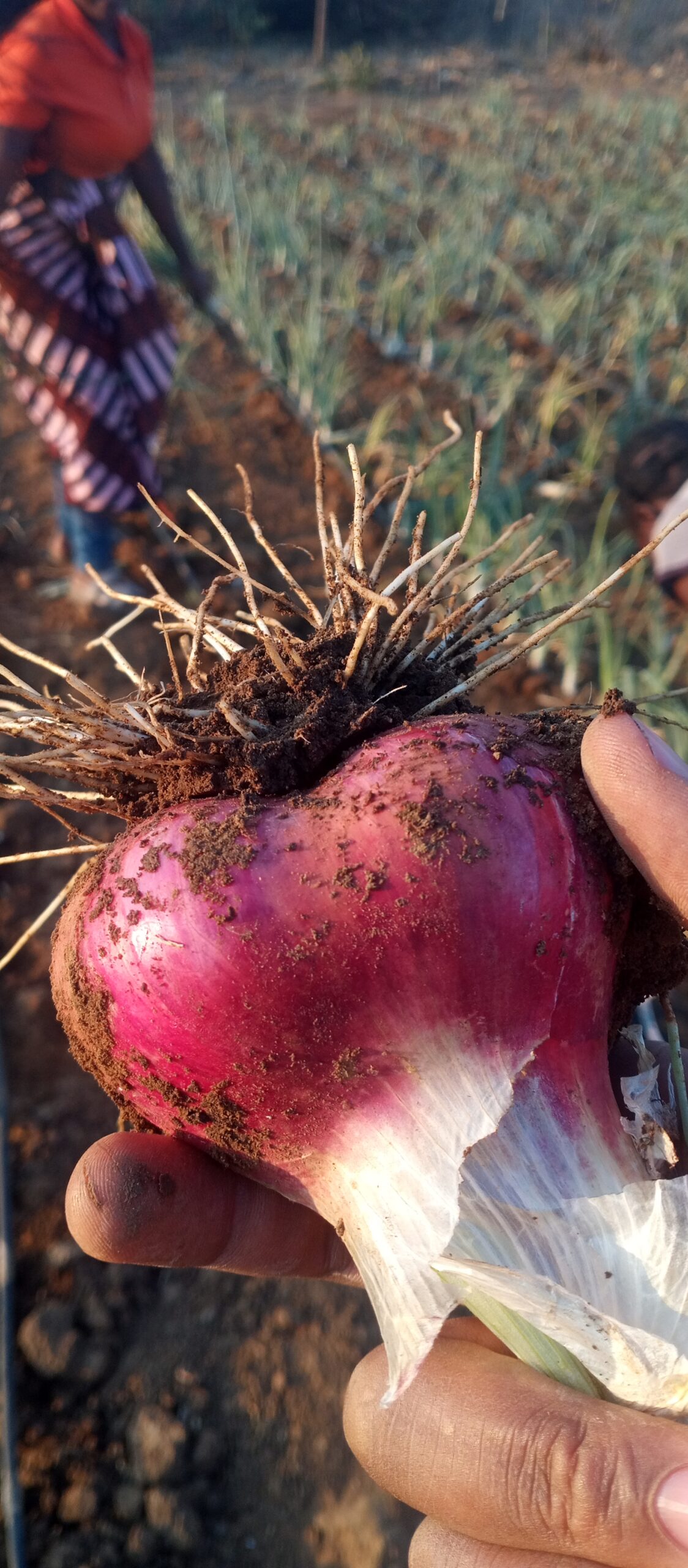
We want to test bamboo biochar again—not as a miracle input, but as one part of a long-term attempt to restore tired family soils. The next project will connect three crops we already care about—bananas, onions and garlic—with two sources of organic material: bamboo from our own land and goat waste from the mixed farm.
This is a project plan and field record, not a claim that the soil has already been restored. We have tried biochar before and want to repeat the work with better records, clearer comparison plots and a longer observation period. The aim is to learn what works on our land near Mwembeshi, Zambia, what fails, what it costs and whether the work is practical enough to continue.
The soil-restoration project at a glance
| Location | Family farm near Mwembeshi, Zambia |
|---|---|
| Primary feedstock | Bamboo from our personal bamboo land |
| Animal amendment | Goat waste to be aged or composted before field use |
| Target crops | Bananas, onions and garlic |
| Project type | Small, measured DIY soil-amendment trial |
| Current status | Planning and preparation; results do not yet exist |
Why we want to repeat the bamboo biochar work
Small family land can lose productivity gradually. The change is not always dramatic enough to appear as one obvious failure. Instead, the soil may become harder to manage, water may move differently, organic material may be scarce and crops may respond unevenly to the same effort.
Our first biochar project gave us a reason to keep asking questions, but not enough information to make a confident claim. This bamboo biochar trial will give us a clearer comparison. We did not want to turn a small trial into a universal recommendation. This time, the objective is more modest: produce a known batch, record how it was made, compare it with untreated soil and follow the plots long enough to see whether any difference persists.
That change in attitude matters. Biochar is not simply charcoal scattered over a field. Its properties depend on the feedstock, the heating process, the amount applied, the soil and what happens to the char before it reaches the crop root zone. A result from another country or another soil cannot be copied without testing.
Bamboo will be our long-term feedstock source
Our personal bamboo land is important to this project because it could provide a repeatable source of biomass in the future. That does not mean all bamboo should be removed. We need to understand which stems can be harvested, how often, how much material can be taken without weakening the stand and what the bamboo land needs returned to it.
The feedstock plan will therefore record:
- bamboo species or local name where known;
- harvest date and approximate quantity;
- stem diameter and whether the material is fresh or dry;
- how much material is used for biochar and how much remains on the land;
- transport time and labour; and
- whether harvesting changes erosion, shade or regrowth conditions.
In other words, the bamboo land is not only a source of char. It is another system that must be managed. If the soil-restoration project depletes the place supplying its carbon, it is not a sustainable solution.
What we mean by bamboo biochar in this project
For this project, biochar means a carbon-rich material made by heating plant biomass with limited oxygen. It is different from ash and different from incompletely burned material. We will record the production method, moisture content and evidence of complete cooling for every batch.
This project will not present our DIY method as an industrial standard. We will record the design, fuel, batch size, approximate operating time and visible result so that another person can understand what we actually did. If we cannot estimate the process temperature, we will say so rather than inventing one.
After production, we will cool the char fully before handling it. Next, we will screen out obvious contaminants, record particle size and keep the batch separate from household ash. We will decide the final application rate after measuring the available material and the target plot areas; we will not apply an impressive-sounding rate simply because it appears in another experiment.
Goat waste is a soil amendment question—not eutrophication
We initially used the word “eutrophication” when describing the idea of using goat waste to add nutrients. That term is not correct for a soil-restoration method. Eutrophication describes excessive nutrient enrichment in a water body, where algal growth can reduce water quality and oxygen available to aquatic life. It is a form of nutrient pollution, not a target condition for our fields. See the US EPA explanation of nutrient pollution and eutrophication.
For the farm project, the correct question is whether aged or composted goat manure can provide nutrients and organic matter without creating a pathogen, salt, runoff or crop-burn problem. We will keep goat waste out of irrigation water and away from drains and water bodies. We will not apply fresh manure directly to edible crops as if it were automatically safe.
The goat-waste method still needs to be specified. We need to record whether the material will be composted with dry plant material, aged in a covered pile, used as a diluted liquid extract or handled in another way. Those are different treatments and should not be mixed together in the results.
Our bamboo biochar comparison design
The simplest useful comparison is not biochar versus a perfect commercial fertilizer. It is a small set of treatments that we can actually repeat and observe.
| Treatment | Question |
|---|---|
| Control: no added amendment | How does the crop perform under the existing soil and normal management? |
| Bamboo biochar only | Does the char change soil condition or crop response on its own? |
| Composted goat manure only | Does the nutrient and organic-matter amendment change the crop response? |
| Bamboo biochar plus composted goat manure | Does combining the carbon material with nutrients perform differently from either material alone? |
Where space permits, we will repeat each treatment in more than one small plot. A single treated bed can be interesting, but it cannot tell us whether a difference came from the amendment, a naturally better patch of soil, uneven watering or chance. We will mark and photograph the plots and keep their crop and irrigation conditions as consistent as possible.
Bananas, onions and garlic will not be treated as the same crop
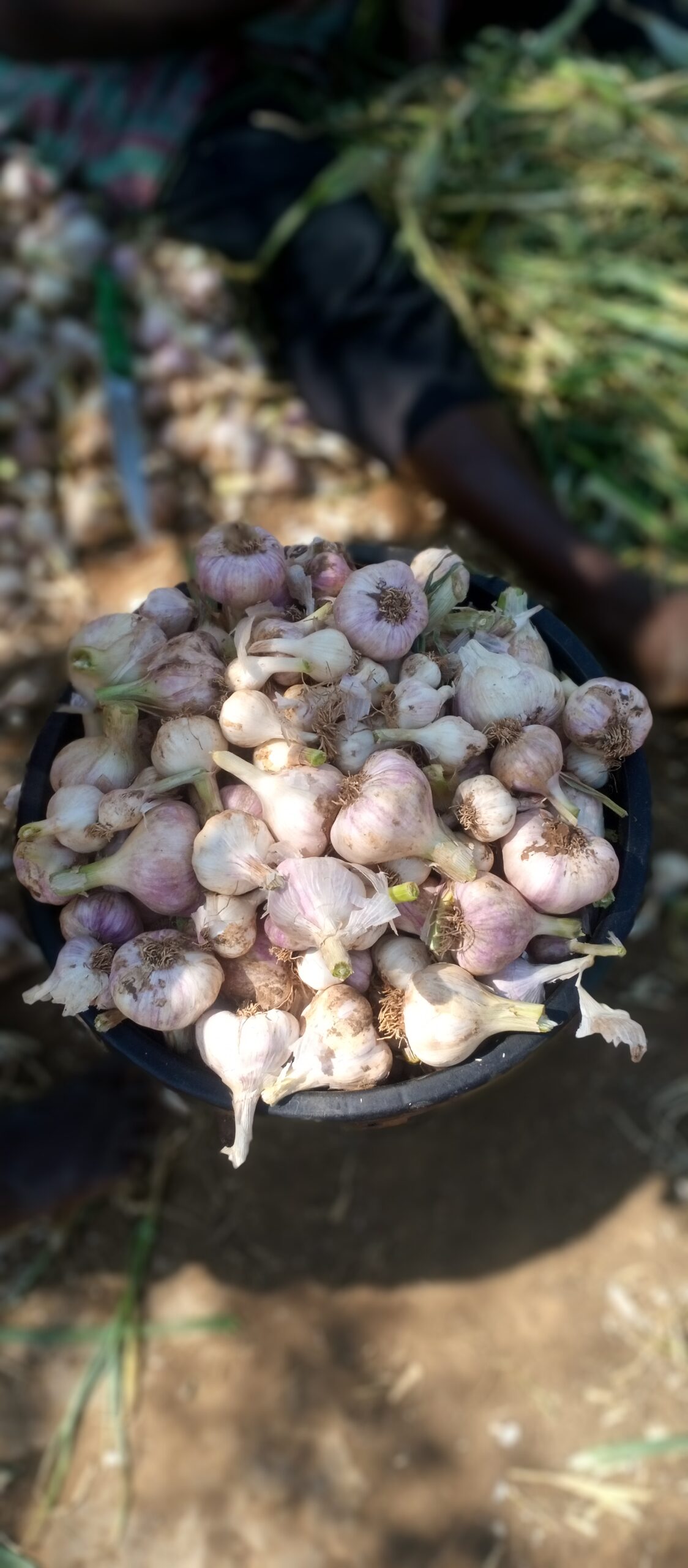
The three target crops have different growth patterns and management needs. Bananas are a long-term planting with a large root zone and continuing water demand. Onions have a shorter cycle and a harvestable bulb. Garlic will be a new project close to the old piggery, so we will record its starting conditions carefully.
We will avoid claiming that one application rate is suitable for all three crops. Instead, each plot record will include:
- crop and variety if known;
- plot dimensions and plant spacing;
- soil condition before treatment;
- amendment mass applied and how it was measured;
- irrigation method and watering frequency;
- planting and treatment dates;
- plant survival, height or leaf counts where practical;
- pest, disease and grazing damage; and
- harvest weight and marketable versus rejected produce.
What we will measure before adding anything
Before the first application, we want a baseline. At minimum, that means documenting the plot location, crop, soil appearance, recent management and irrigation. If affordable testing is available, we will add soil pH, organic carbon, electrical conductivity and available nutrients. If laboratory testing is not possible, we will state that limitation and rely on consistent field observations rather than calling the trial a laboratory study.
We will take photographs from the same marked position. We will write down the date, weather, irrigation event and visible crop condition. A photograph is useful evidence, but it does not replace a measurement; a greener-looking plant may simply be in a wetter part of the plot.
How we will monitor the bamboo biochar soil-restoration trial
We intend to run the project beyond one harvest. Biochar is being considered because the question is about longer-term soil condition, not only a short burst of crop colour.
| Time | Record |
|---|---|
| Before treatment | Plot map, soil baseline, photographs, crop and amendment plan. |
| Application day | Batch number, amendment mass, mixing method, labour and weather. |
| Two to four weeks | Emergence or survival, leaf condition, irrigation response and any burn or pest symptoms. |
| Mid-season | Plant size, soil moisture observations, weeds, disease and amendment costs to date. |
| Harvest | Total weight, marketable weight, rejected produce and labour used. |
| After harvest | Soil observations, remaining char, next crop decision and what we would change. |
Research from other soils gives us questions, not guaranteed results. For example, field and pot studies of bamboo biochar have reported changes in soil carbon, pH or phosphorus availability under particular conditions. Those findings are useful context, but they do not prove that our soil near Mwembeshi will respond in the same way. See this bamboo-biochar vegetable study and this bamboo-plantation soil-amendment study.
Risks we need to manage
A DIY soil project can create new problems if it is treated as harmless by default. Poorly produced char may contain ash or contaminants. A very alkaline amendment may change soil pH too quickly. Too much manure can add salts or nutrients that move away with irrigation and rain. Uncovered manure piles can attract flies, smell, lose nutrients and wash into drainage routes.
We will therefore keep batches labelled, separate raw from composted material and record where each amendment is placed. We will not apply unknown material beside a water source. Any crop-burn, unusual smell, standing water, fish impact or sudden plant decline we will record as a failure signal, not hidden because it makes the project look less successful.
The bamboo land is part of the accounting
Future biochar projects will only be credible if the bamboo source is accounted for. We need to compare the char produced with the labour of harvesting, cutting, drying, transporting and processing the bamboo. If a batch requires more time or fuel than the soil benefit justifies, that is an important result.
We also need to distinguish carbon storage from crop benefit. A material may remain in soil for a long time, but that does not automatically mean the farmer gained enough yield, water efficiency or cost savings to justify producing it. Carbonnest will track both questions: what happened to the carbon material, and what happened to the crop and soil.
What success would mean
Success would not necessarily mean that every treated plot produces the largest harvest. A useful result could be that one treatment improves water retention, reduces the need for purchased inputs, improves soil handling or performs well enough to justify another season. A negative or inconclusive result would also be useful if the method, costs and conditions were recorded clearly.
Our first goal is to replace a vague idea—“biochar might restore the soil”—with a sequence of manageable questions:
- Can we produce a consistent bamboo-char batch with the tools and labour available?
- Can we prepare goat waste safely and repeatably?
- How can we apply both amendments at measured rates?
- Can we keep treated and untreated plots comparable?
- Can we monitor the crops for long enough to separate a real pattern from a lucky bed?
- Does the result justify repeating the work on bananas, onions, garlic or the bamboo land?
What we will publish next
This article is the project design. Future updates will report the bamboo harvest, the biochar-making method, the goat-waste preparation, the first application and the crop measurements. We will publish photographs of the work, receipts where available and failures as well as improvements.
The project begins with a small family land question, but it connects soil, crops, livestock, bamboo, water and household budgets. That is why we want to document it carefully. Restoring soil is not one dramatic input. It is a series of decisions that must remain useful after the first experiment is over.
Readers can review how Carbonnest records evidence and measurements, our editorial policy and our corrections policy.

